
Home / 2025-2026 News / Central Wyoming College Secures $1 Million National Science Foundation Grant to Advance Geospatial Technology Education
Central Wyoming College Secures $1 Million National Science Foundation Grant to Advance Geospatial Technology Education
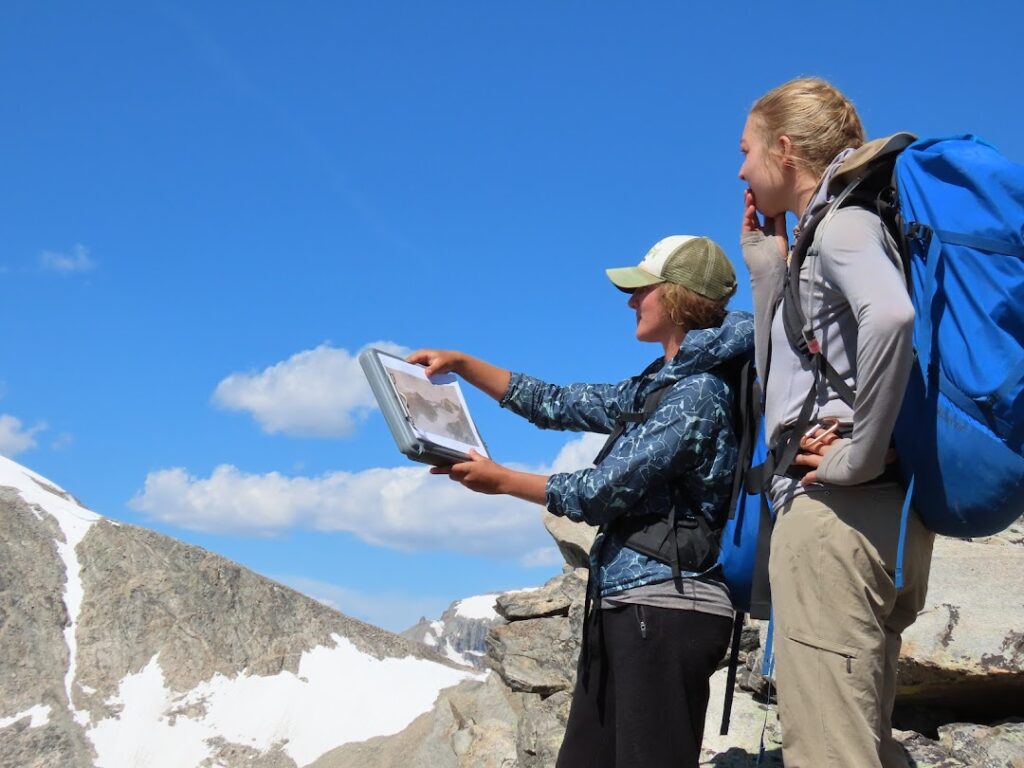
LANDER and RIVERTON, Wyo. — Central Wyoming College’s Science, Technology, Engineering, Mathematics, Health and Education Division, under the leadership of Dr. Jennifer Kellner, and the Central Wyoming College Alpine Science Institute announce that they have received a $1 million grant from the National Science Foundation. The funding supports program innovation in the Geospatial Information Science and Technology Program and strengthens the preparation of geospatial technicians to meet industry needs.
Through the National Science Foundation Advanced Technological Education Integrated Geospatial Information Science and Technology Program (I-GIST), Central Wyoming College is developing and modernizing geospatial information science and technology curricula, creating an educational pipeline for high school students, offering professional development opportunities for educators and early-career professionals, and establishing paid internships to enhance workforce readiness.
“The opportunities this presents for our students and for the Central Wyoming College community as a whole are truly spectacular,” said Jacki Klancher, the Principal Investigator (PI) for the program and Professor of Environmental Science and Health and Director of Research and Innovation at the Alpine Science Institute. “Students participate in paid internships, earn college credit, and develop professional connections, all while completing their degrees.”
Kathryn Primrose, Outreach Director for Central Wyoming College Lander and the Alpine Science Institute and a Co-PI on the grant, said the benefits extend across multiple programs. “Students from a number of programs benefit from this grant,” she said. “This includes those studying Expedition Science, the Associate of Applied Science in Geospatial Information Science and Technology, and the Trailbuilding Program. Any student who completes sufficient credits to earn a certificate in Geospatial Information Science and Technology (I-GIST) becomes eligible to propose paid internship opportunities.”
Mara Gans, also a Co-PI, and Instructor of Geospatial Information Science and Technology and Expedition Science, is developing a new regionally relevant curriculum, designing a professional development course, and collaborating with high schools to expand dual-enrollment opportunities. “Serving on this grant is an incredible opportunity for our students and for me as a faculty member,” Gans said. “This kind of leadership experience is invaluable.”
Last week, Klancher and Gans were in Washington, D.C., attending the annual Advanced Technological Education Principal Investigator Conference, representing Central Wyoming College and sharing insights on their innovative work in geospatial education.
Darran Wells, Professor of Outdoor Education and Leadership at Central Wyoming College, supervises trailbuilding interns and provides backcountry field instruction for the program. “The relationship between trailbuilding and geospatial technologies may not be immediately obvious, but every trail we design and construct depends on geospatial software and skills,” Wells said. “The connection between this Advanced Technological Education Integrated Geospatial Information Science and Technology Program and expanding sustainable recreation through the Central Wyoming College Recompete Grant is very exciting.”
The Integrated Geospatial Information Science and Technology Program builds on an earlier National Science Foundation-funded pilot project, GEOBridges, led by Klancher and Professor Todd Guenther. The pilot provided condensed course offerings and paid internships for students applying geospatial technologies in natural and cultural resource management. Over three years, the pilot supported more than 75 students, providing them with college credit and practical field experience. The result was a well-prepared group of employment-ready technicians equipped with geospatial science and backcountry skills to meet Wyoming’s workforce needs.